
Cabbie's London — Kensington
Kensington Walking Route
Kensington Palace → Royal Albert Hall → Museums → Harrods
Walk Map
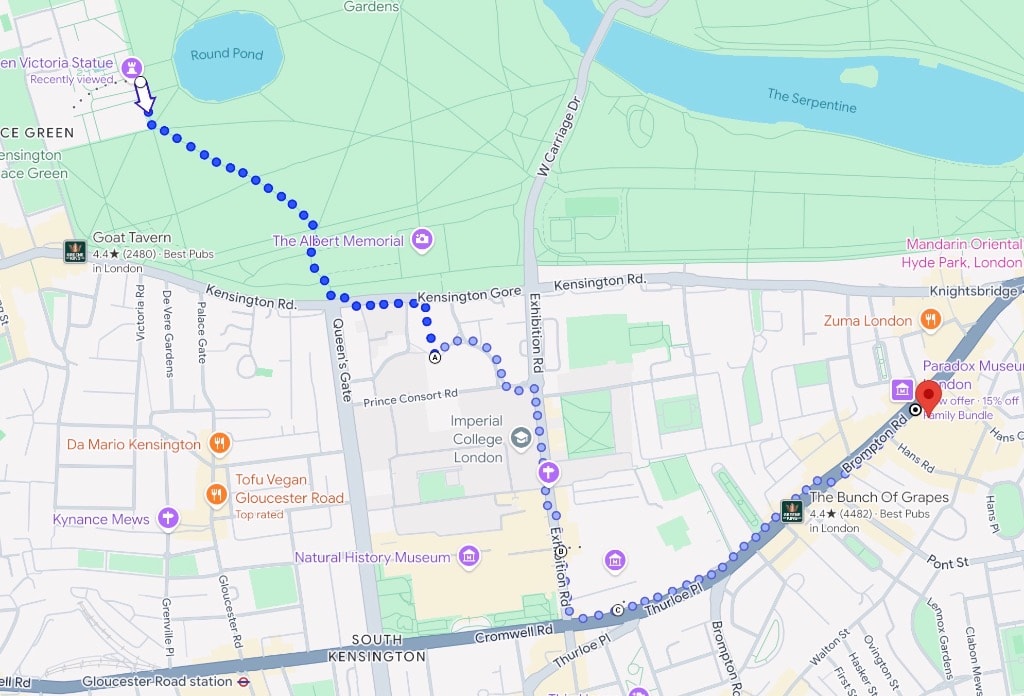
The Route
Stop by Stop
Kensington Palace
Start here — Kensington Gardens, W8
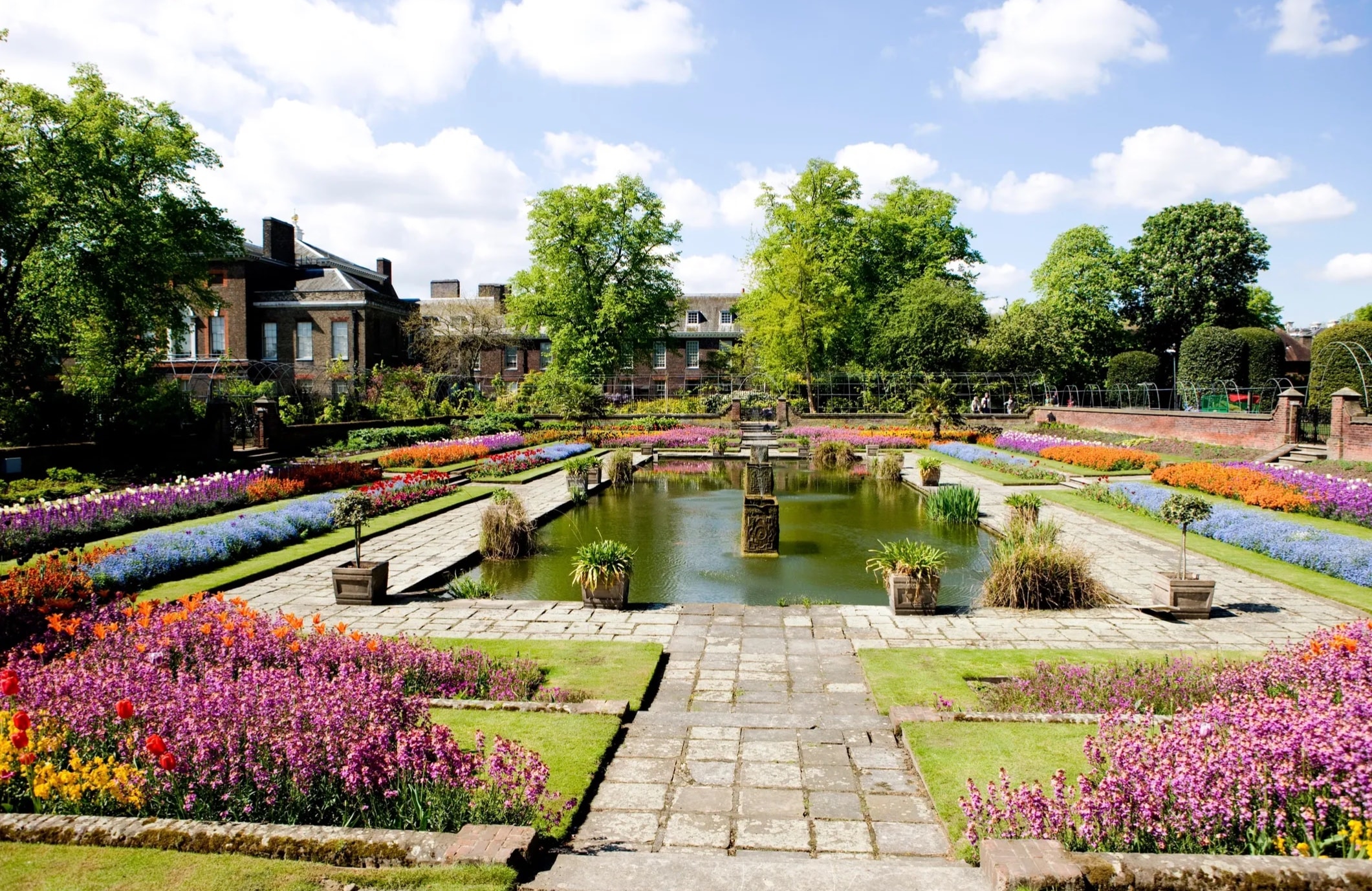
Begin at Kensington Palace. You can view it from the outside or go in — tickets are required for the State Rooms and exhibitions. For a classic photograph, stand inside Hyde Park near the Round Pond looking back towards the palace facade. The Sunken Garden alongside the palace is free to visit and worth a few minutes.
Born and Raised Here
A working royal residence since 1689, when William III bought it to escape the damp air near the Thames. Queen Victoria was born here in 1819 and grew up in the palace before moving to Buckingham Palace on her accession. Diana, Princess of Wales lived here from her marriage in 1981 until her death in 1997. The public still leave flowers at the gates in her memory. The Duke and Duchess of Cambridge — now the Prince and Princess of Wales — have their London residence here.
Royal Albert Hall
Kensington Gore — facing Hyde Park
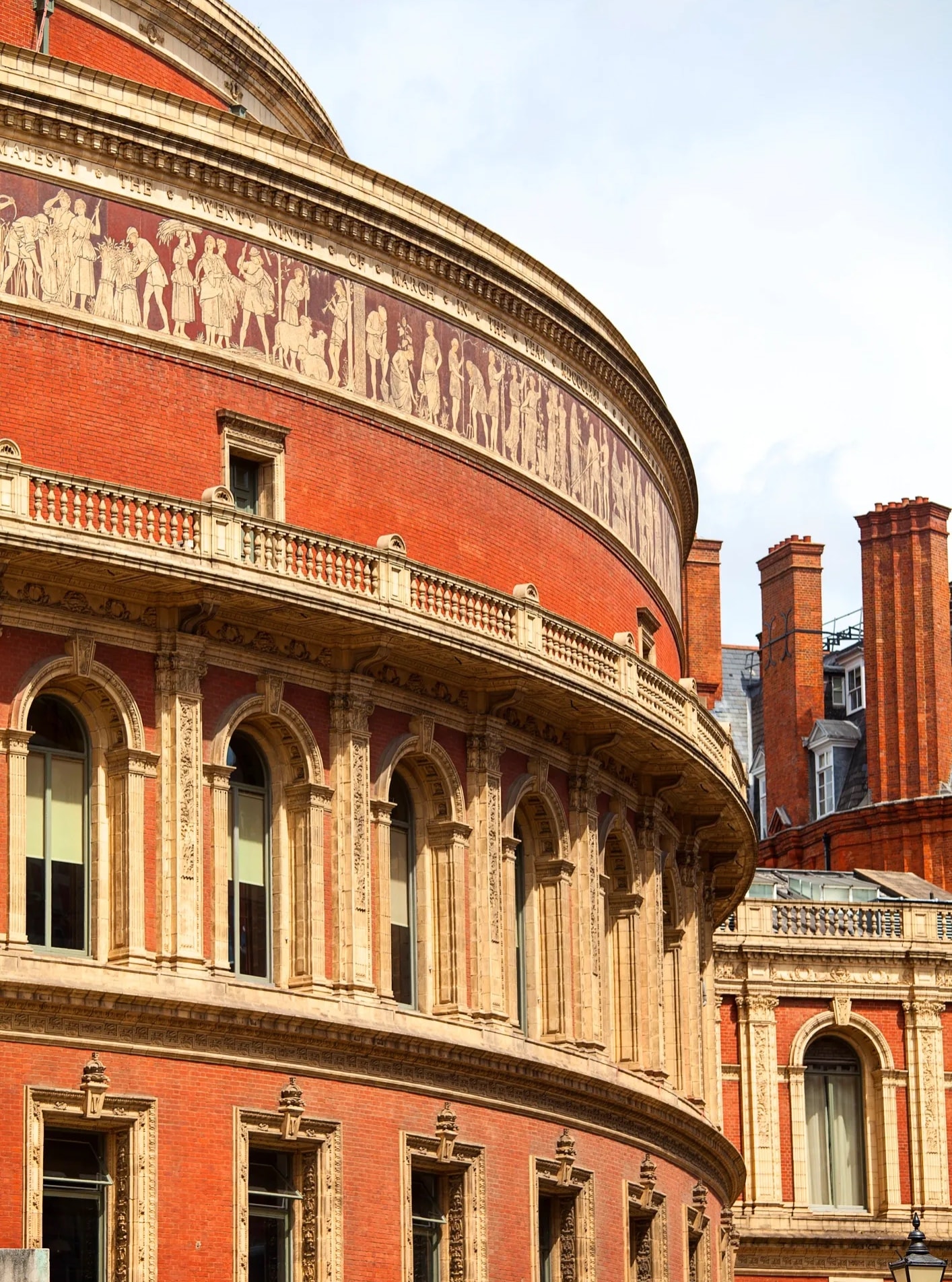
Walk out of Hyde Park and head east along Kensington Gore to the Royal Albert Hall. The building is impressive from the outside — a great red-brick oval with a terracotta frieze running around the top. You don't need a ticket to admire it. The Albert Memorial directly opposite in Hyde Park is also worth a look.
A Memorial in Music
Opened in 1871 and named after Prince Albert, Queen Victoria's husband, who died in 1861. Victoria laid the foundation stone but was so grief-stricken she could not speak at the opening ceremony — the Prince of Wales read her speech. The hall is most famous for the BBC Proms, an eight-week summer season of classical concerts held every year since 1895. It seats around 5,500 people and has hosted everyone from The Beatles to Eric Clapton.
Natural History Museum
Cromwell Road — Exhibition Road junction
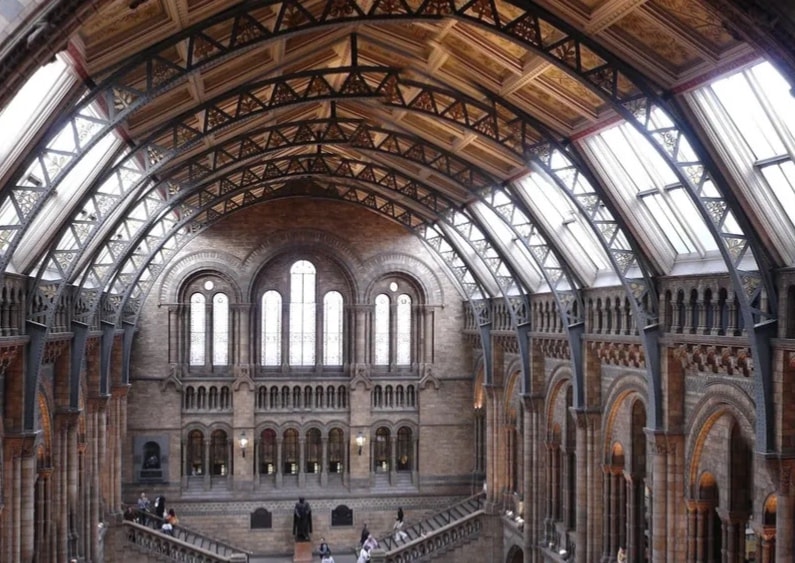
Turn south down Exhibition Road. The Natural History Museum is on your left. Free entry. The building itself is a masterpiece of Victorian architecture — the Romanesque terracotta facade is worth studying before you go in. Inside, the famous dinosaur skeletons and the full-size blue whale suspended in the Hintze Hall are the biggest draws. Allow at least an hour.
The Cathedral of Nature
Designed by Alfred Waterhouse and opened in 1881. The building was deliberately designed to feel like a cathedral — Waterhouse believed natural history deserved the same reverence as religion. The terracotta tiles are decorated with hundreds of carved animals, both living and extinct. The collection holds around 80 million specimens. The blue whale skeleton that hangs in the entrance hall replaced the famous Diplodocus cast — nicknamed Dippy — in 2017.
Science Museum
Exhibition Road — next to the Natural History Museum
Immediately next door on Exhibition Road is the Science Museum. Also free. If you have children with you it's hard to walk past — the interactive galleries are excellent. Even without children, the history of flight gallery and the original Apollo 10 command module are worth seeing. The two museums share a wall; you can walk between them.
From the Great Exhibition
The Science Museum grew out of the collections assembled for the Great Exhibition of 1851, organised by Prince Albert in Hyde Park. After the exhibition closed, the objects were moved to South Kensington and eventually became the foundation of both the Science Museum and the V&A. The museum holds over 300,000 objects including Stephenson's Rocket, the first jet engine, and DNA models used by Watson and Crick.
Victoria & Albert Museum
Cromwell Road — Cromwell Gardens entrance
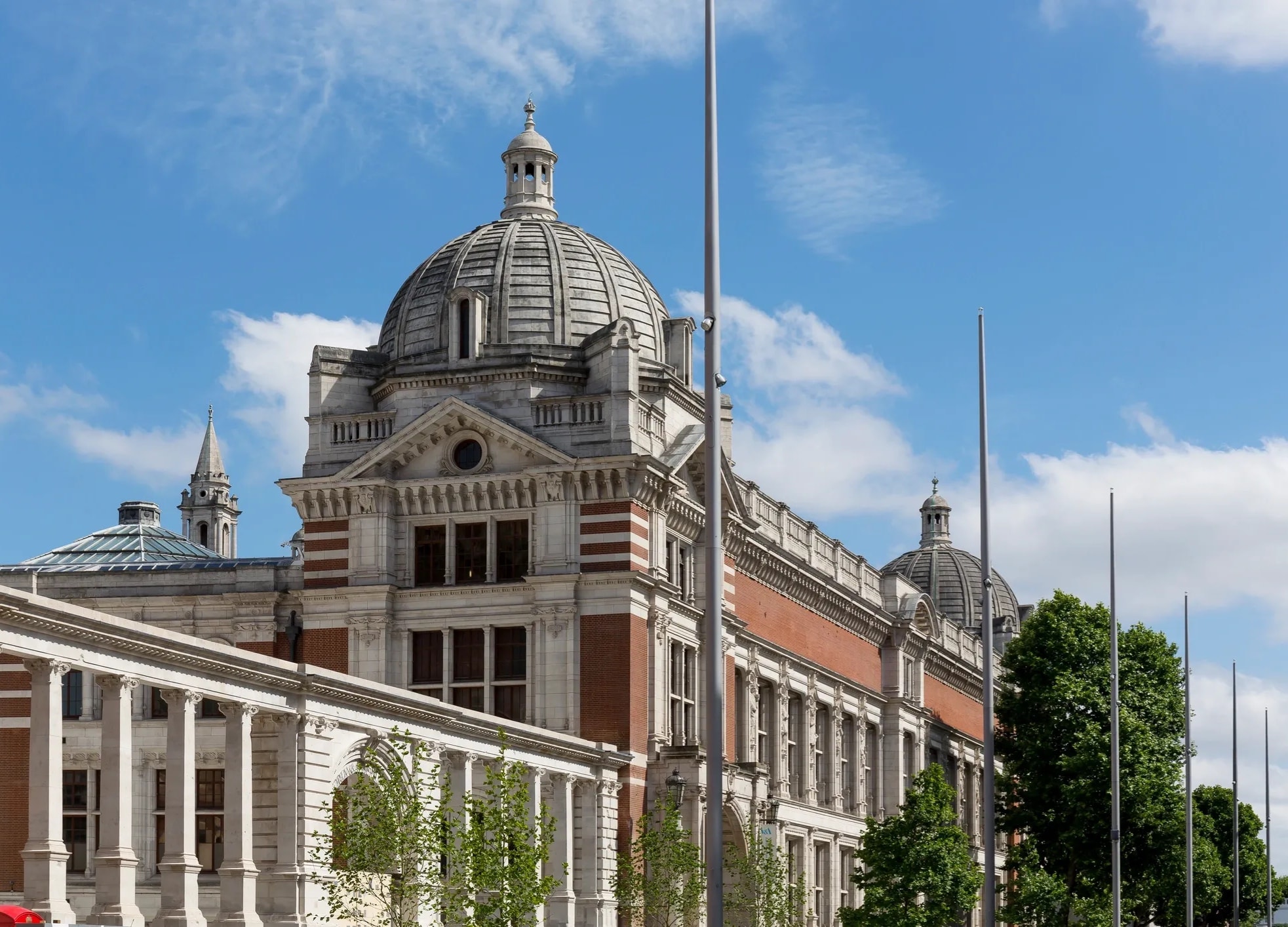
Round the corner on Cromwell Road is the V&A. Free entry for the permanent collection. One of the world's great museums of art, design and performance — the collection spans 5,000 years and covers everything from fashion and jewellery to furniture, ceramics and photography. The café in the original refreshment rooms is one of the most beautiful in London.
The World's Greatest Design Museum
Founded in 1852 as the Museum of Manufactures, intended to improve the design standards of British industry by showing craftsmen the best work from around the world. Renamed the Victoria and Albert Museum in 1899. It holds over 2.3 million objects across 145 galleries. The Cast Courts contain full-size plaster casts of some of the world's greatest sculptures — including Trajan's Column and Michelangelo's David — made in the 19th century when travel was difficult and museums wanted to show visitors what they couldn't easily see in person.
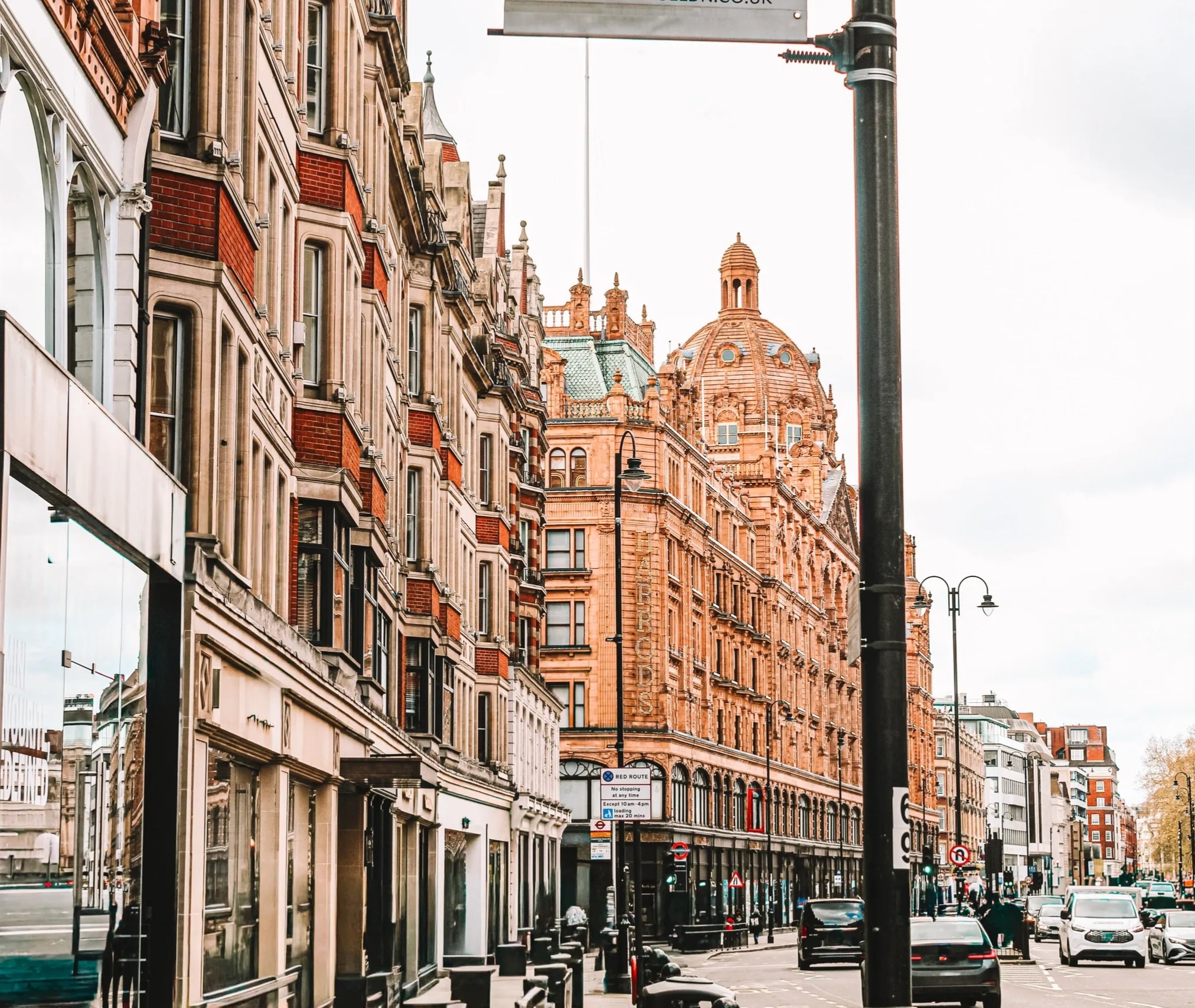
Harrods
87–135 Brompton Road, Knightsbridge
Continue along Brompton Road and finish at Harrods. Walk through the famous Food Halls even if you're not buying — it's part of the experience. The building is lit up with thousands of lights after dark, which makes it worth a return visit in the evening if you're in the area. The Egyptian Escalator inside is also worth seeing.
From a Single Room to Seven Floors
Charles Henry Harrod opened a small grocery shop on this site in 1849 with a single room and two assistants. By the time his son took over in the 1860s it had expanded significantly. The current building dates from 1905. Harrods was sold to Mohamed Al Fayed in 1985 and then to the Qatar Investment Authority in 2010 for £1.5 billion. The store covers 4.5 acres of selling space across seven floors and employs around 5,000 people. The Food Halls — particularly the meat, fish and cheese counters — have been a London institution for generations.
Quick Cabbie Tips
- The three big museums — Science, Natural History and V&A — are all free. Excellent value and easily a full day between them.
- They get very busy at weekends and during school holidays. Arrive before 10am if you can, especially for the Natural History Museum.
- Harrods Food Halls are worth seeing even if you only browse — the meat, fish and cheese counters are a spectacle.
- The route is mostly flat and straightforward — one of the easier walks in the collection.
- The Albert Memorial opposite the Royal Albert Hall is free to view and often overlooked. It's one of the most elaborate monuments in London.
- Kensington Palace's Sunken Garden is free to enter and a quiet spot away from the main tourist flow.
Nine more routes
The Full London Collection
East London, Westminster, City of London, South Bank, Greenwich, Camden and more. One payment. All guides. More added over time.
Cabbie's London · Real recommendations from the driver's seat · Enjoy the walk