
Cabbie's London — Hampstead
Hampstead Walking Route
Burgh House → Keats House → Parliament Hill → Hampstead Heath → Kenwood House
Walk Map
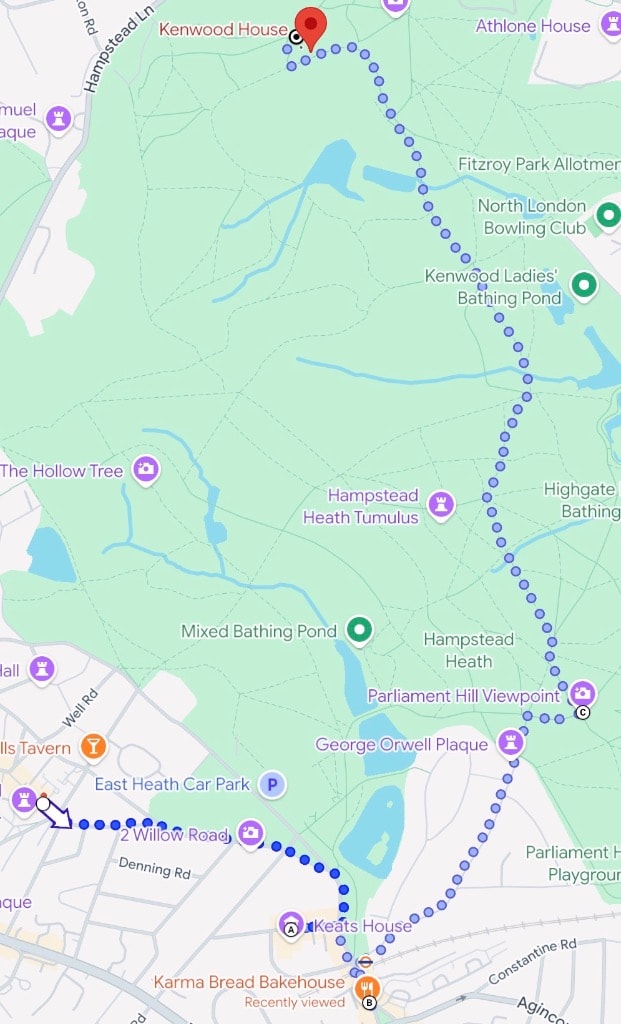
The Route
Stop by Stop
Burgh House
Start here — New End Square, NW3
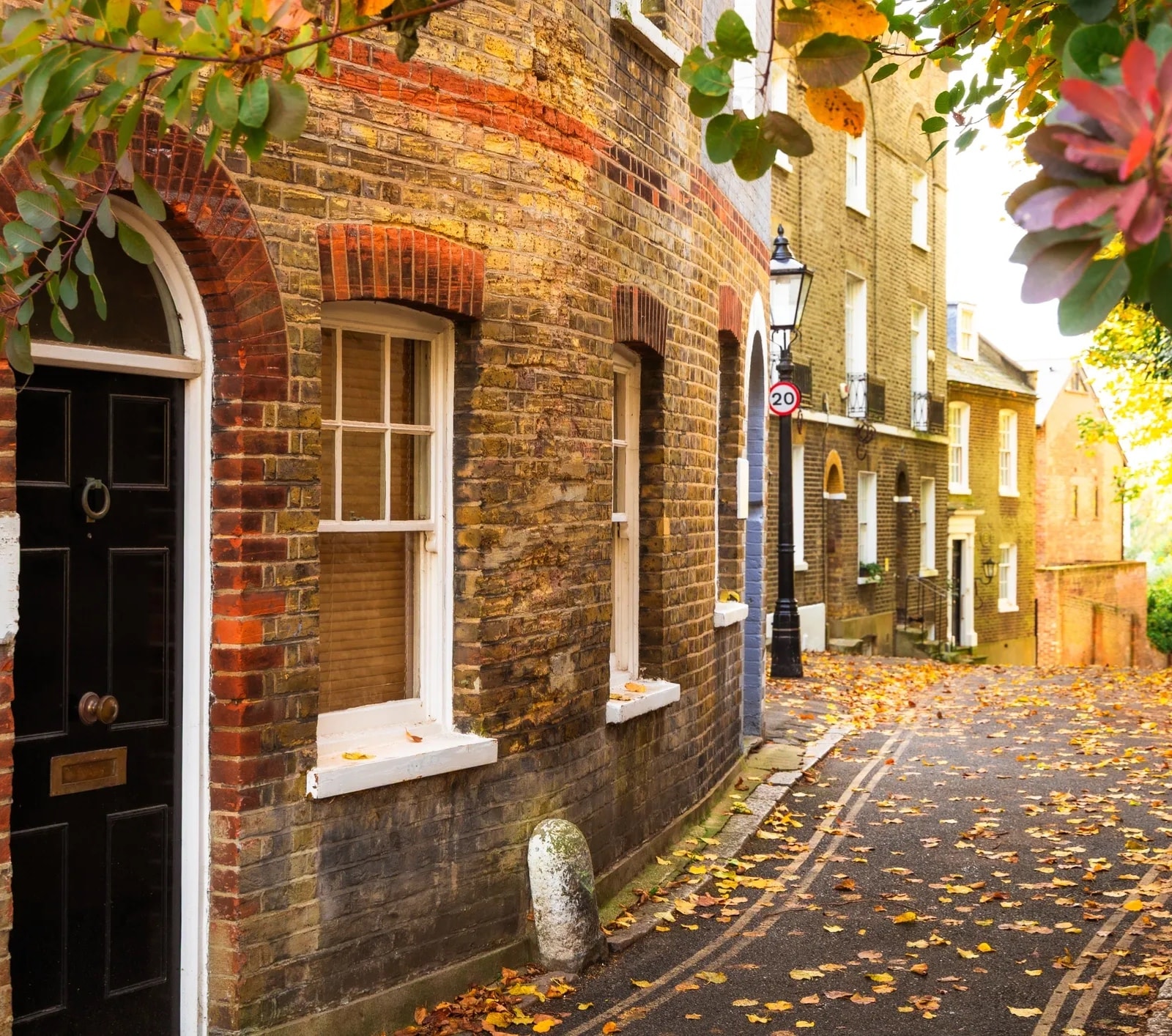
Start at Burgh House on New End Square. Step into Hampstead's village atmosphere, with historic houses and quiet streets that feel a world away from central London. The house itself operates as a small museum telling the story of Hampstead and the people who have lived here — worth a few minutes inside before you begin.
Hampstead's Village Museum
Burgh House dates from 1704 and is one of Hampstead's most historic buildings, built during the period when Hampstead was a fashionable spa town drawing visitors from London to take the waters. It takes its name from the Reverend Allatson Burgh, who lived here in the early 19th century. The house has had a varied history — it was used as a military hospital during the First World War and fell into disrepair before being restored in the 1970s. Today it operates as a community museum and arts centre, with a café in the basement and regular exhibitions on Hampstead's history and notable residents.
Keats House
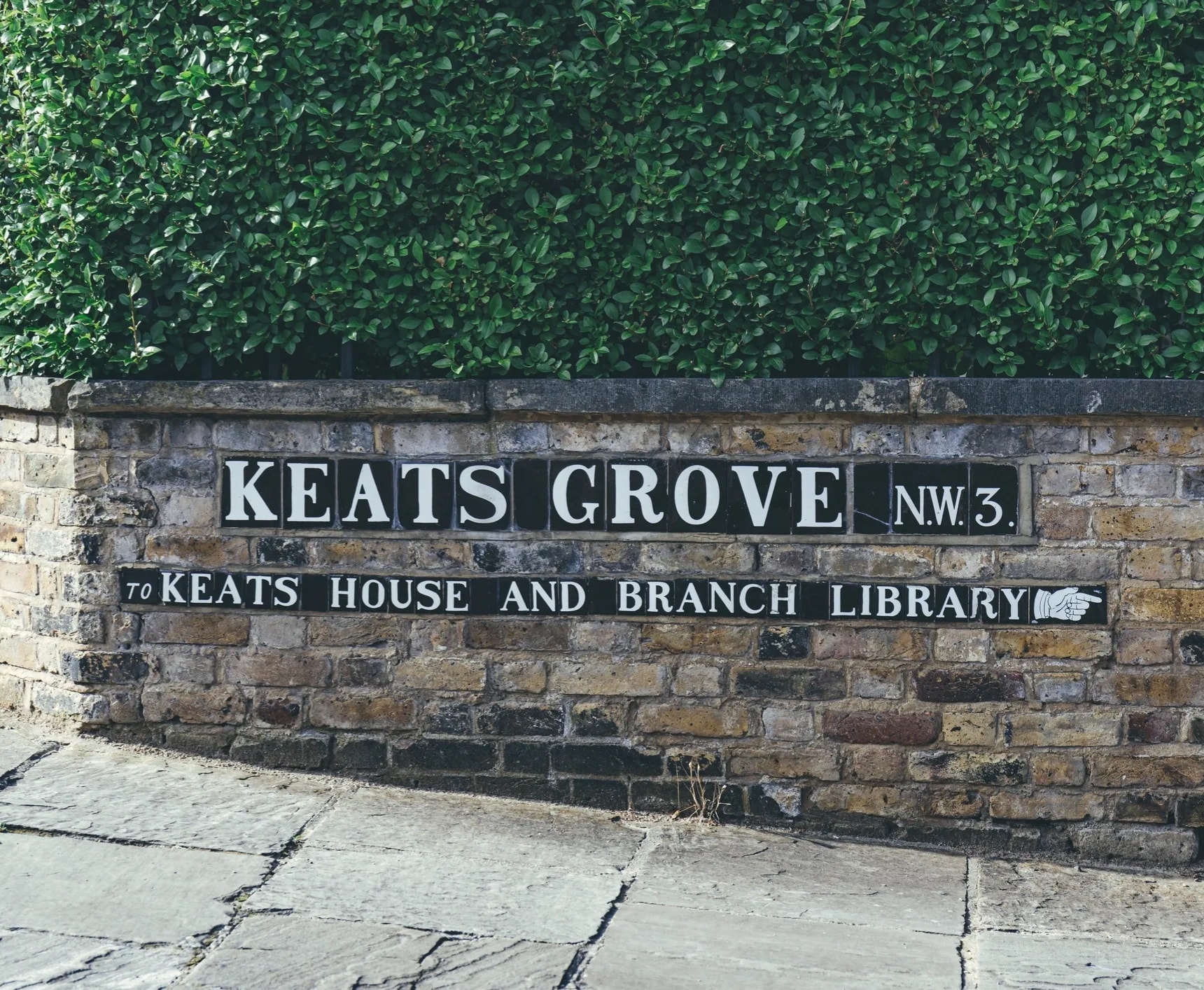
Keats Grove, NW3
Walk towards Keats Grove and visit Keats House, the former home of the Romantic poet John Keats. The house is a museum and requires a small entry fee. Even from the outside, the garden and the quiet of the street give a sense of why Keats found Hampstead so conducive to writing.
Ode to a Nightingale
John Keats lived here between 1818 and 1820, during one of the most productive periods of his short life. He moved to Hampstead for the fresh air — he had already been diagnosed with tuberculosis — and wrote some of his best-known poetry while living in this house, including Ode to a Nightingale, Ode on a Grecian Urn and The Eve of St Agnes. He fell in love with his next-door neighbour Fanny Brawne, to whom he became engaged. He left for Rome in 1820 in a final attempt to recover his health and died there in February 1821, aged 25. The plum tree in the garden under which he is said to have written Ode to a Nightingale is still there.
Hampstead Village
Flask Walk / Heath Street, NW3
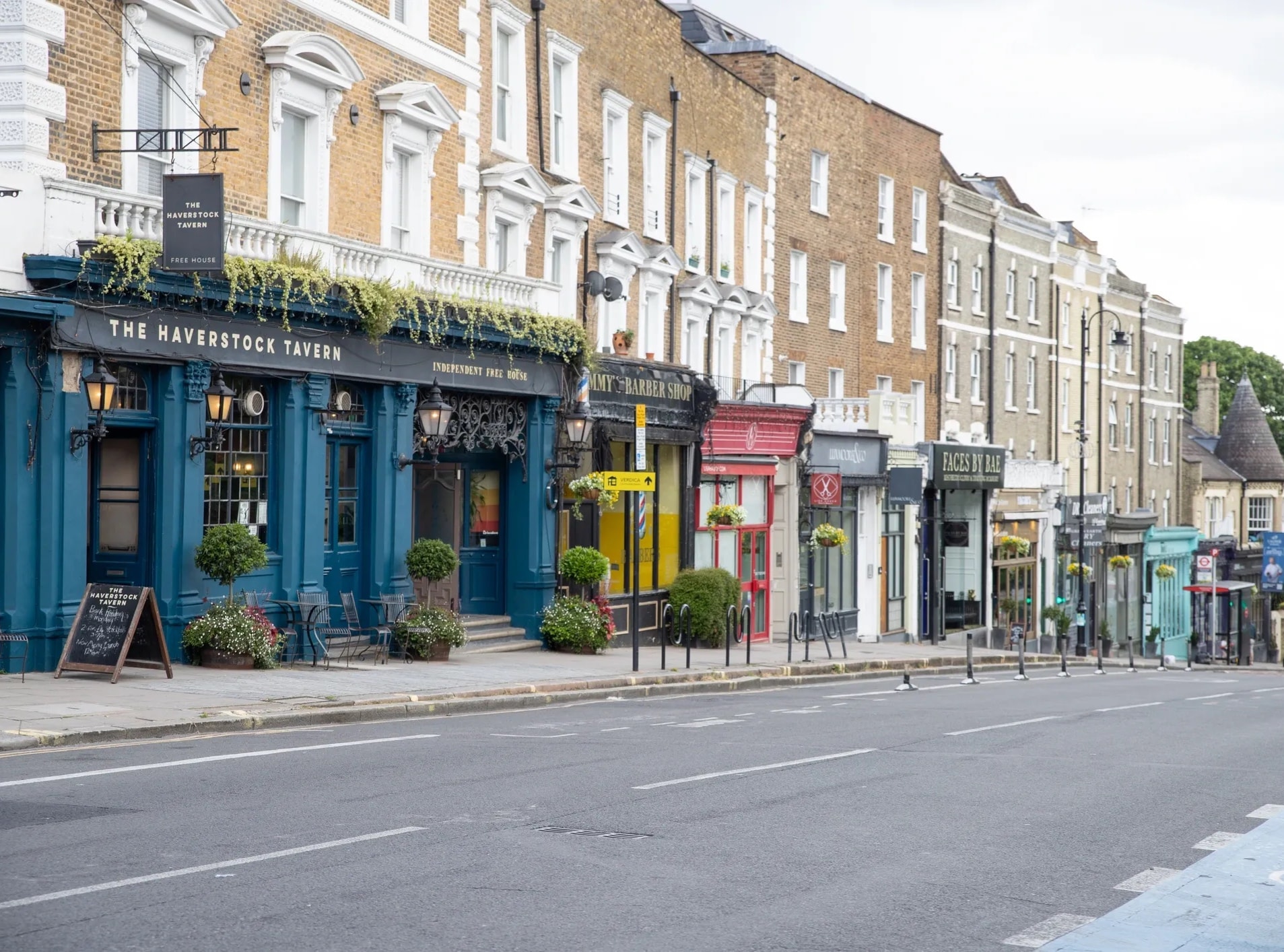
Wander through the streets of Hampstead Village, exploring the independent shops, cafés and characterful buildings. Stop at Karma Bread Bakehouse for a highly-rated coffee, fresh bread or a pastry before heading onto the Heath. This is the last good opportunity to eat and drink before the longer section of the walk.
A Village That Resisted London
Hampstead grew from a small medieval settlement into one of London's most desirable addresses. Despite being absorbed into Greater London, its narrow streets, old pubs and independent shops have helped it retain a village character that most of the surrounding city lost long ago. The area became fashionable in the 17th century when Hampstead Wells — a chalybeate spring on the Heath — attracted visitors from London seeking the health benefits of the waters. The Flask pub on Flask Walk takes its name from the flasks of spa water that were sold there. Hampstead has been home to an extraordinary concentration of writers, artists and intellectuals over the centuries, including John Constable, H.G. Wells, Sigmund Freud, George Orwell and Agatha Christie.
Parliament Hill
Parliament Hill, Hampstead Heath, NW5
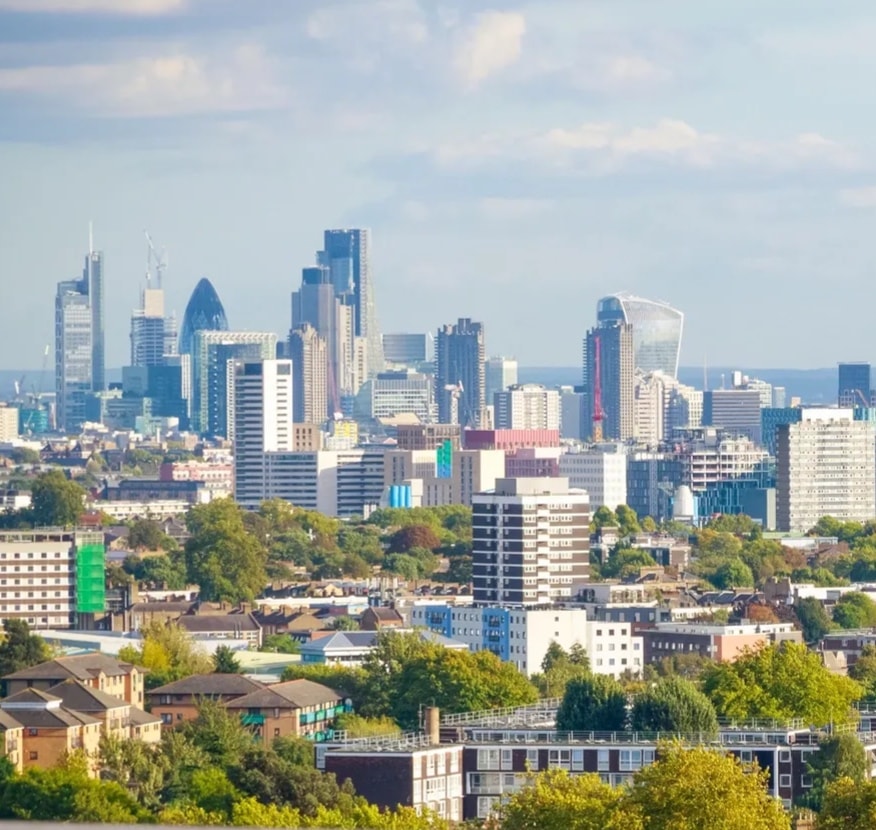
Make your way onto Hampstead Heath and climb towards Parliament Hill. From the summit, take in one of London's great panoramic views across the skyline — St Paul's Cathedral, The Shard, Canary Wharf and the City are all visible on a clear day. The view is protected by law and cannot be built out.
A View Protected by Law
Parliament Hill stands at around 98 metres above sea level and provides one of the finest panoramic views across London. The view from the summit towards St Paul's Cathedral is one of several protected sightlines in London — buildings cannot be constructed that would obstruct it. The hill's name is traditionally linked to the English Civil War, when Parliamentarian forces are said to have used the area as a strategic viewpoint over London, though historians debate the exact origin. The hill has also been used for kite flying for centuries — it remains one of the best places in London to fly a kite, and the sight of dozens of kites on a windy day is a distinctly Hampstead experience.
Hampstead Heath
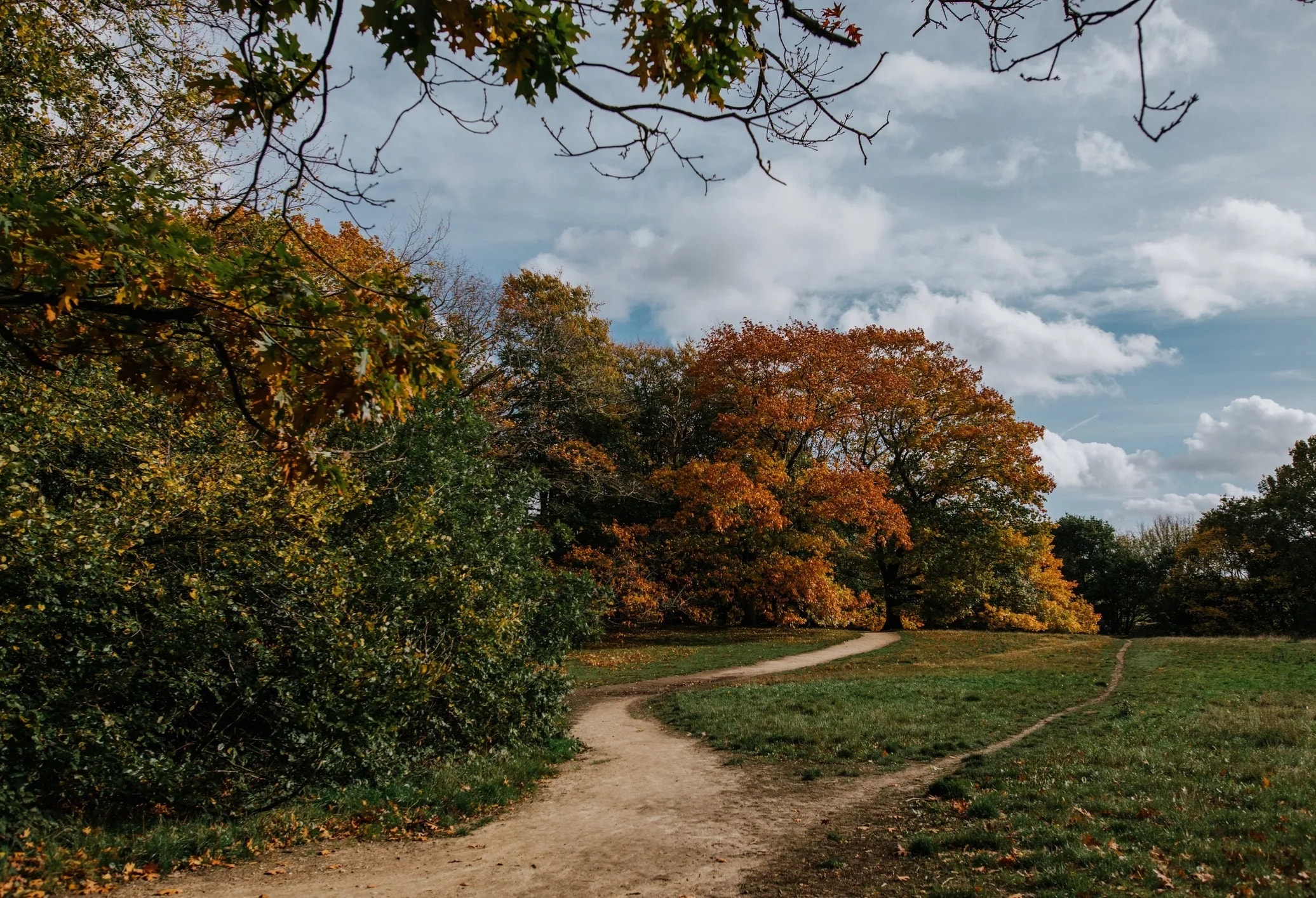
Hampstead Heath — heading north through the woodland
Now comes the proper trek. Walk north through Hampstead Heath, leaving the streets behind and heading through woodland, open grassland and countryside-like paths. The Heath is large enough to get genuinely lost in — which is part of the point. Allow plenty of time and wear appropriate footwear.
800 Acres of Managed Wildness
Hampstead Heath covers around 800 acres and is one of London's largest and most famous open spaces. It has remained remarkably undeveloped compared with much of the surrounding city, largely because of sustained campaigns by local residents and reformers who fought off building proposals throughout the 19th and 20th centuries. The Heath was saved from development in 1871 when the Metropolitan Board of Works purchased it for public use. It contains three open-air swimming ponds — one for men, one for women, one mixed — that have been used for wild swimming since the 19th century. The Heath is also home to around 180 species of birds and significant populations of bats, foxes and other wildlife.
Kenwood House
Hampstead Lane, NW3 — free entry
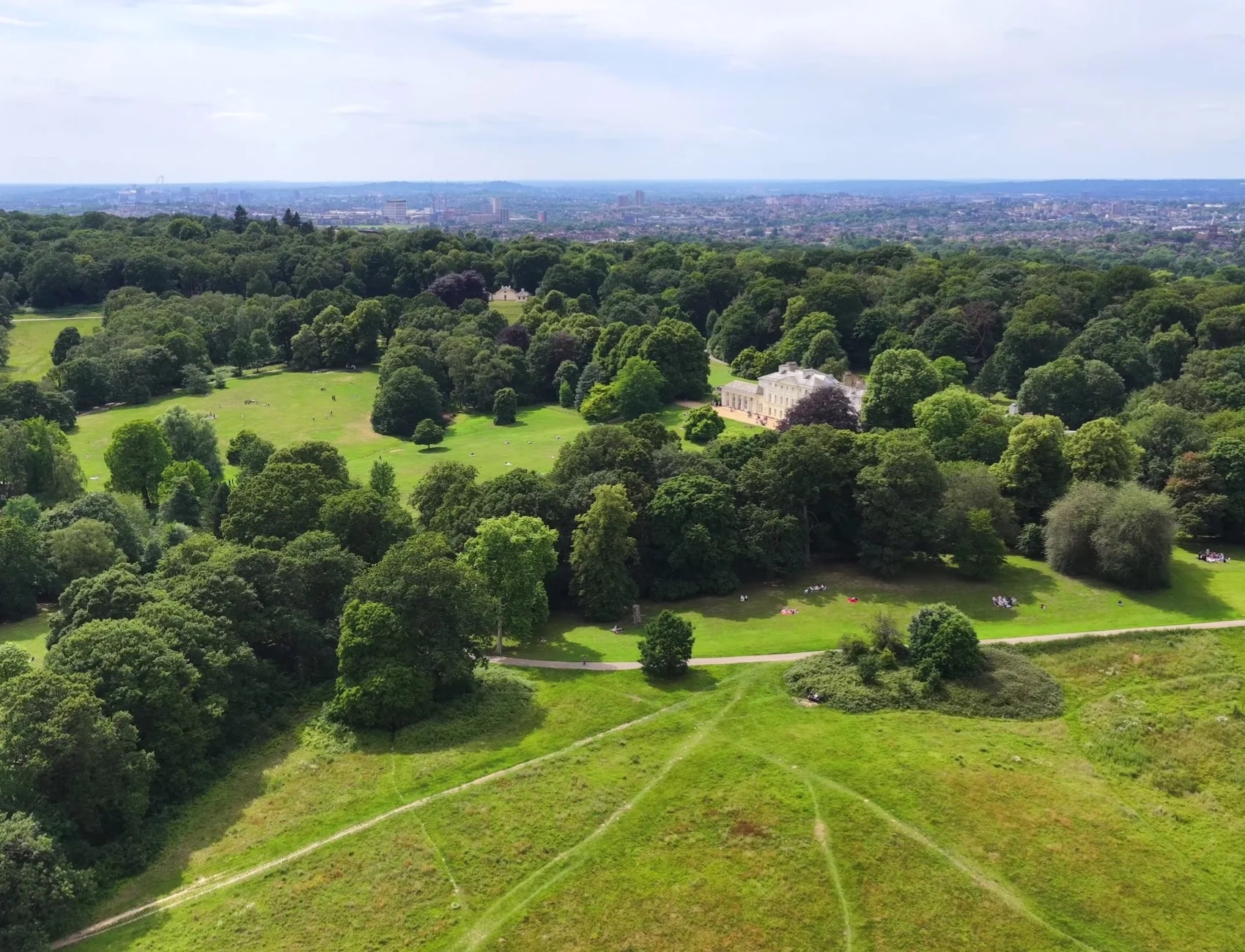
Continue through the Heath towards Kenwood House. Explore the beautiful grounds and, if you have anything left in the tank, visit the house itself and its impressive art collection. Entry to the house and permanent collection is free. The café in the old service wing is a good place to stop at the end of the walk.
Rembrandt, Vermeer and a Landscape by Turner
Kenwood House is an elegant 18th-century villa redesigned by the architect Robert Adam between 1764 and 1779 for William Murray, the 1st Earl of Mansfield. The interiors are among the finest examples of Adam's neoclassical style in England. The house contains an important art collection bequeathed to the nation by Edward Guinness, 1st Earl of Iveagh, in 1927, including works by Rembrandt, Vermeer, Gainsborough and Turner. The Rembrandt self-portrait is considered one of the finest in existence. The grounds — designed in the English landscape style — run down to a lake that forms a natural boundary between the formal gardens and the open Heath. Open-air concerts are held by the lake every summer.
Quick Cabbie Tips
- This is the most demanding of the walking routes — comfortable shoes are essential. The Heath has uneven, muddy and sometimes steep paths, particularly after rain.
- Grab food and water in Hampstead Village before heading deep into the Heath. Karma Bread Bakehouse on Flask Walk is a good stop.
- Parliament Hill is worth the climb for the views even if you don't complete the full trek to Kenwood.
- Kenwood House is free to enter, although some exhibitions and events may require tickets. The café is a good place to finish.
- Allow extra time if you want to explore Kenwood House properly — the art collection alone is worth an hour.
- The open-air swimming ponds on the Heath are open year-round to members and day visitors. Worth knowing if you're visiting in summer.
- The Heath is large enough to get genuinely lost in. Keep the Kenwood House spire or the Parliament Hill trig point as landmarks if you're unsure of your direction.
Nine more routes
The Full London Collection
East London, Westminster, City of London, South Bank, Kensington, Notting Hill, Greenwich, Camden and more. One payment. All guides. More added over time.
Cabbie's London · Real recommendations from the driver's seat · Enjoy the walk