
Cabbie's London — Camden
Camden Walking Route
Camden High Street → Camden Market → Camden Lock → London Zoo → Primrose Hill
Walk Map
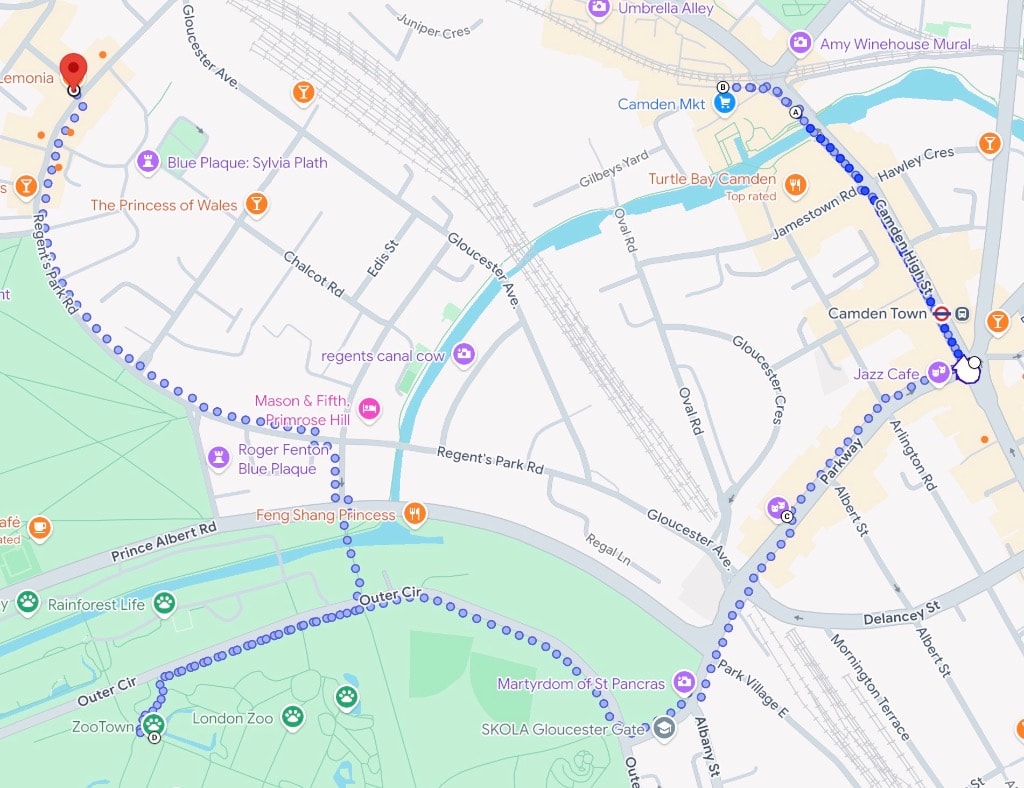
The Route
Stop by Stop
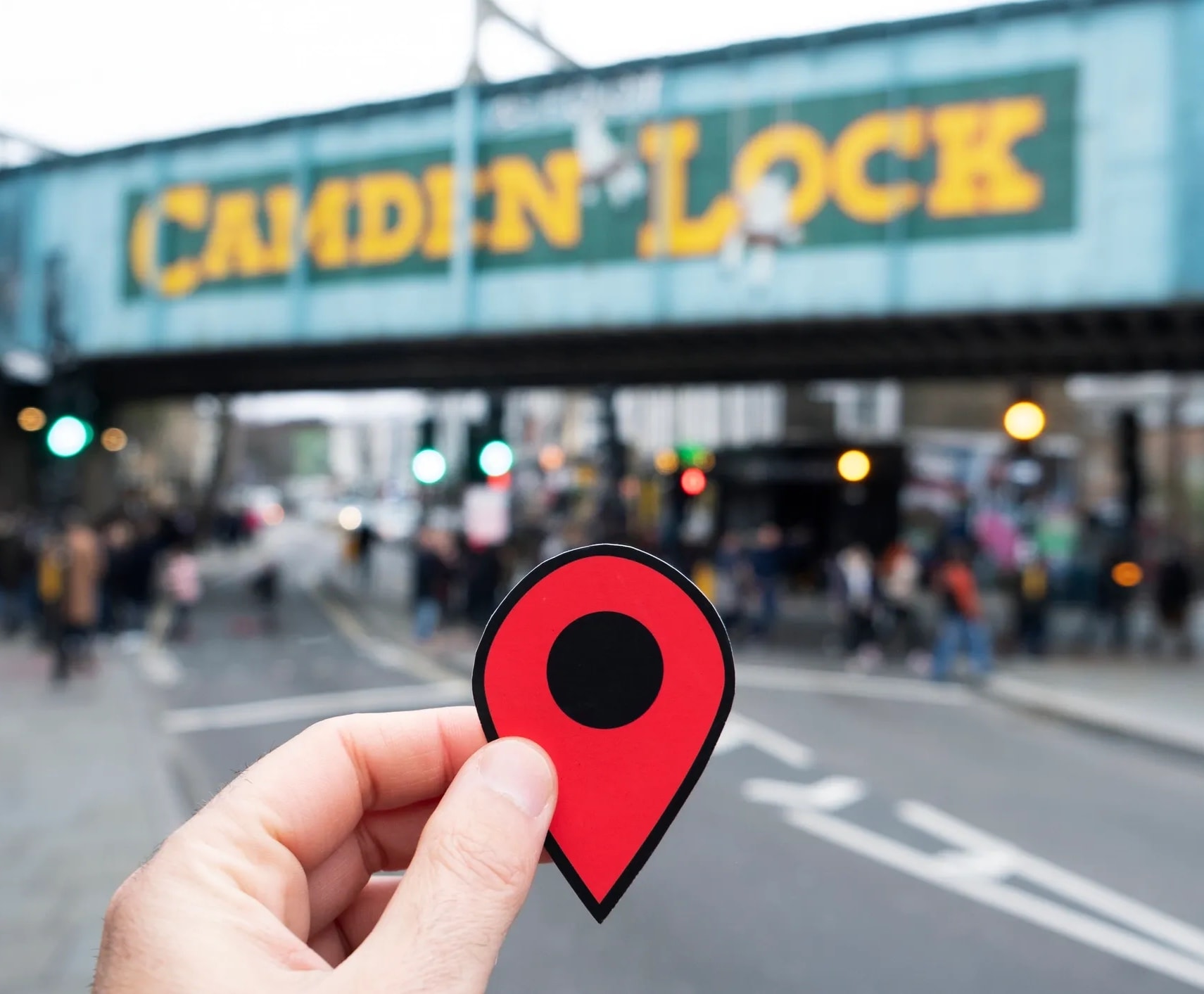
Britannia Junction
Start here — Camden High Street / Kentish Town Road junction, NW1
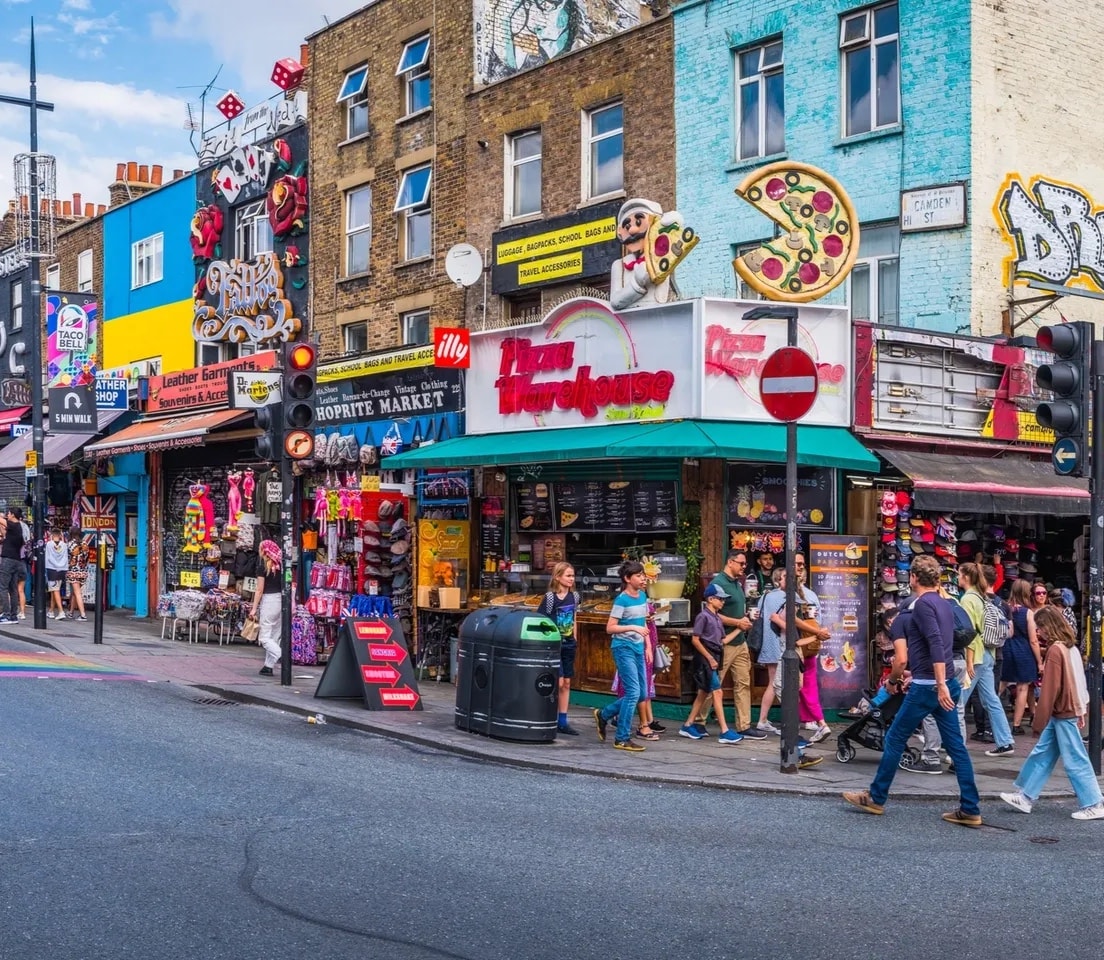
Start at Britannia Junction and head north along Camden High Street. This is where Camden's famous alternative character really starts to show — the shops, the street art and the general atmosphere are distinct from almost anywhere else in London.
How Camden Got Its Character
Camden developed rapidly during the 19th century after the opening of the Regent's Canal in 1820 and the arrival of railway connections shortly after. The area became a centre for industry and working-class housing. Its transformation into a hub for alternative culture happened gradually from the 1970s onwards, as cheap rents attracted artists, musicians and independent traders. The music venues that grew up around the High Street and Lock — the Electric Ballroom, Dingwalls, the Jazz Café, the Roundhouse — helped establish Camden as one of the most important live music areas in London.
Camden High Street
Camden High Street, NW1
Take your time walking up the High Street. Punk, rock, goth, LGBTQ+ and alternative culture are all part of Camden's identity, with colourful shops, street art and diverse characters along the way. The shop fronts here are some of the most visually striking in London — giant boots, oversized figures and elaborate facades compete for attention.
The Music Scene
Camden's association with live music stretches back decades. The Roundhouse on Chalk Farm Road — a former railway engine shed — hosted some of the most important concerts of the 1960s and 70s, including early performances by The Doors, Jimi Hendrix and Led Zeppelin. The Electric Ballroom on Camden High Street has been a venue since 1938. Amy Winehouse, who lived locally, was a regular presence around the area's music scene. The Hawley Arms pub near the Lock became particularly associated with her and with the Camden indie scene of the mid-2000s.
Camden Market
Buck Street / Camden High Street, NW1
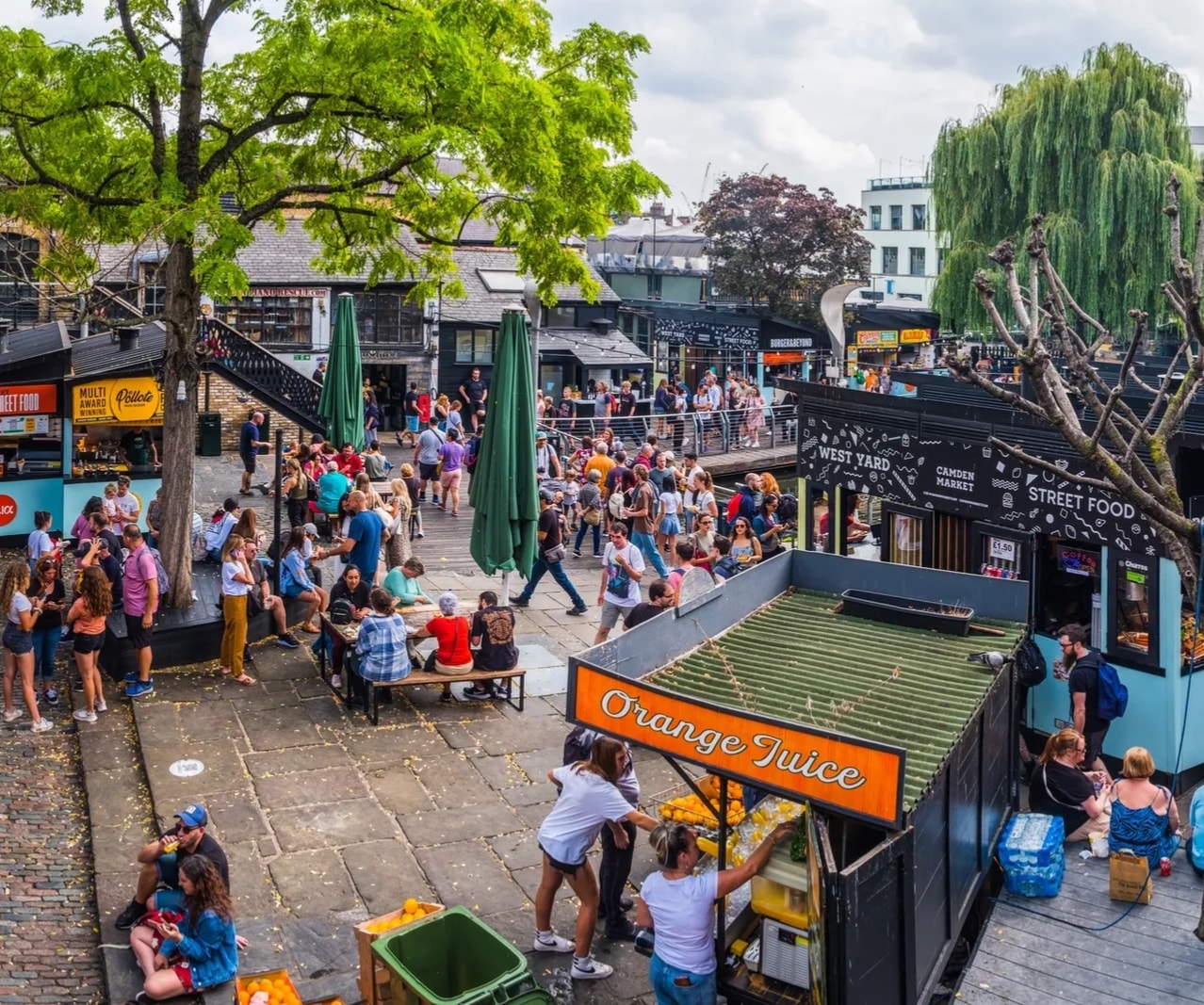
Continue towards Camden Market and explore the huge collection of independent shops, food stalls, clothing and souvenirs. The market is actually several distinct markets clustered together — Buck Street Market, Stables Market, Camden Lock Market and others — each with a slightly different character. The food stalls in particular draw large crowds at weekends.
From 16 Stalls to Millions of Visitors
Camden Market began in 1973 with just 16 traders selling arts and crafts on a Sunday. It has grown into one of London's most famous markets, attracting around 100,000 visitors on a busy weekend. The Stables Market — built into the former horse hospital and stables that served the canal — is the largest section and covers around 450 stalls. The market has been through several fires and redevelopments over the years but has retained its character as a destination for independent traders, street food and alternative culture.
Camden Lock
Chalk Farm Road, NW1 — canalside
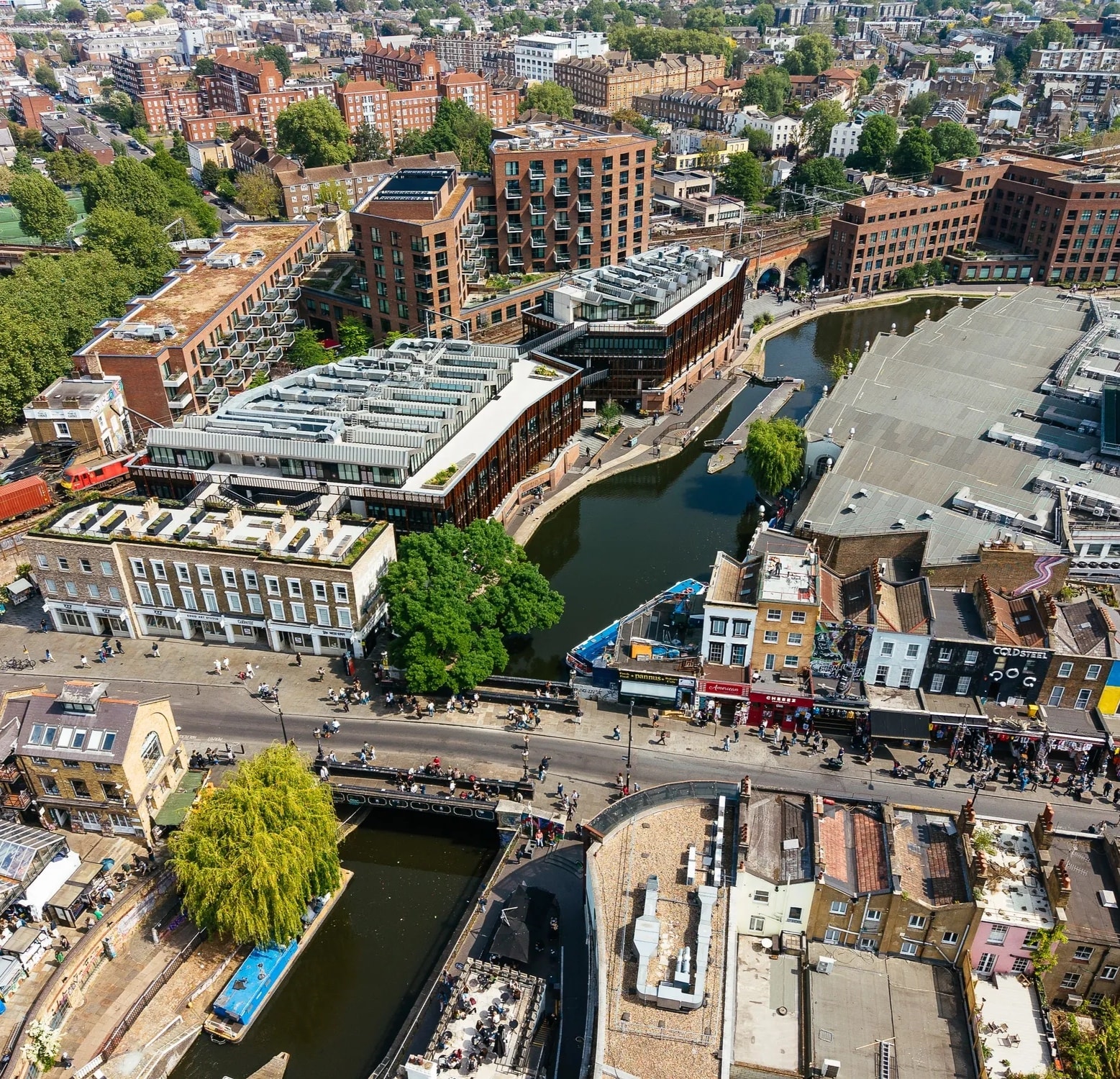
Make your way down to Camden Lock and walk along the canal. This is the heart of the market area — busy, colourful and often completely chaotic, especially at weekends. The lock itself is a working canal lock on the Regent's Canal. Watching a narrowboat work through the lock is worth a few minutes of your time.
The Regent's Canal
The lock sits on the Regent's Canal, which opened in 1820. The canal was built to connect the Grand Junction Canal at Paddington with the River Thames at Limehouse, providing a route for goods to bypass the congested streets of central London. At its peak, the canal carried coal, timber, building materials and manufactured goods. Commercial traffic declined after the railways arrived and had largely ceased by the mid-20th century. The canal is now used almost entirely for leisure — narrowboats, kayaks and the occasional tourist boat. You can walk the towpath west from Camden Lock all the way to Little Venice in Paddington.
London Zoo
Regent's Park, NW1 — tickets required, book in advance
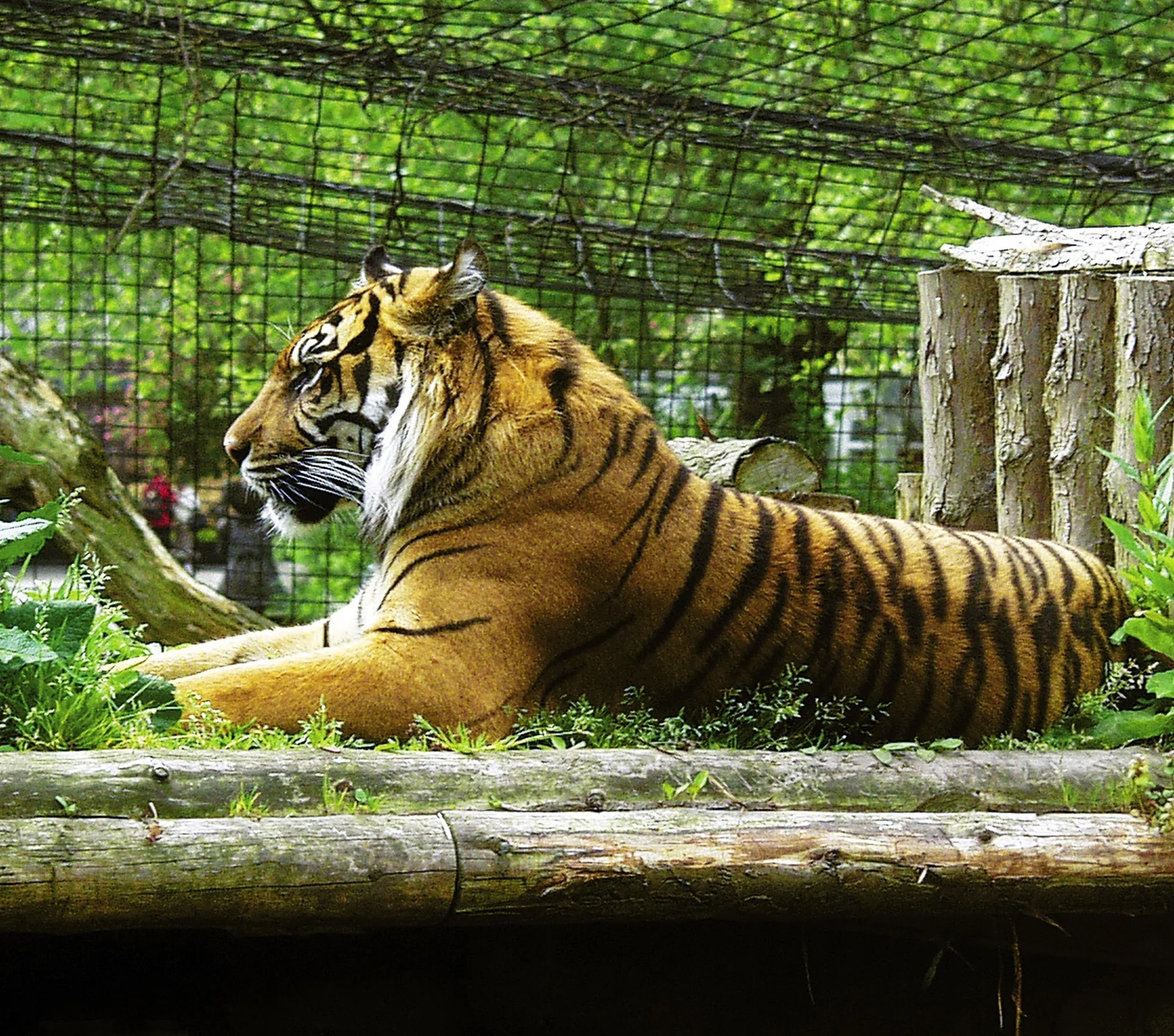
Head west through Camden towards the northern side of Regent's Park and London Zoo. One of the world's oldest scientific zoos, it makes a good stop if you want to spend a few hours exploring. Tickets are required — book in advance, particularly at weekends and during school holidays.
The World's First Scientific Zoo
London Zoo opened in 1828, making it the world's oldest scientific zoo. It was originally established by the Zoological Society of London for scientific study rather than public entertainment — the public were not admitted until 1847. The zoo has been home to some famous animals over the years, including Winnie the bear, a Canadian black bear who lived at the zoo during the First World War and inspired A.A. Milne's Winnie-the-Pooh stories. Paddington Bear's name also has a connection to the area — the Paddington station terminus was the starting point for many journeys that passed through this part of London.
Primrose Hill
Primrose Hill, NW3 — summit at 63 metres
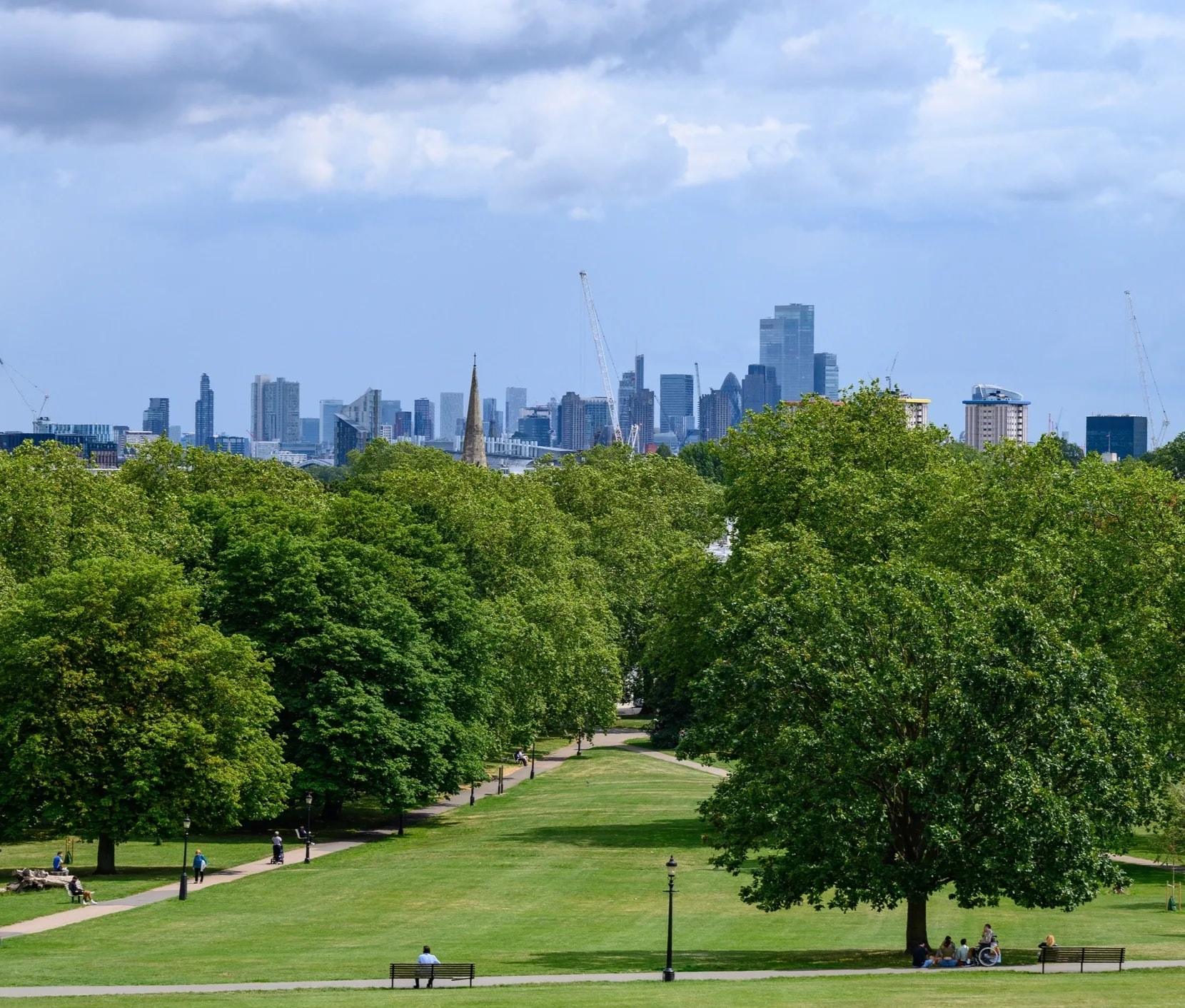
For a quieter finish, head up to Primrose Hill. Climb to the top for one of London's best skyline views — the City, Canary Wharf, the BT Tower and the West End are all visible on a clear day. Then wander down onto Regent's Park Road for a coffee or a meal.
The Best Free View in North London
The summit of Primrose Hill stands around 63 metres above sea level and provides one of the finest panoramic views across London. The hill has long been associated with artists, writers and bohemian London — Sylvia Plath and Ted Hughes lived nearby, as did W.B. Yeats and H.G. Wells at various points. The hill is part of Regent's Park and has been open to the public since 1842. The view is protected by law — buildings cannot be constructed that would obstruct the sightline from the summit towards St Paul's Cathedral.

Regent's Park Road
Regent's Park Road, NW1 — Primrose Hill village
Finish with a coffee, meal or drink at one of the cafés and restaurants around Primrose Hill village. Regent's Park Road has a good concentration of independent places. Lemonia on Regent's Park Road is a long-established Greek restaurant and a good option if you fancy sitting down for a proper meal.
Primrose Hill Village
The streets around Regent's Park Road and Fitzroy Road form what is sometimes called Primrose Hill village — a cluster of independent shops, restaurants and cafés that give the area a distinct neighbourhood character. The area has been popular with creative and media professionals since the 1980s and property prices reflect that. Fitzroy Road, a short walk away, has a blue plaque marking the house where Sylvia Plath lived and died in 1963. W.B. Yeats also lived on the same street at number 23 — the two plaques are a few doors apart.
Optional: Amy Winehouse Memorial
30 Camden Square, NW1 — residential street, please be respectful
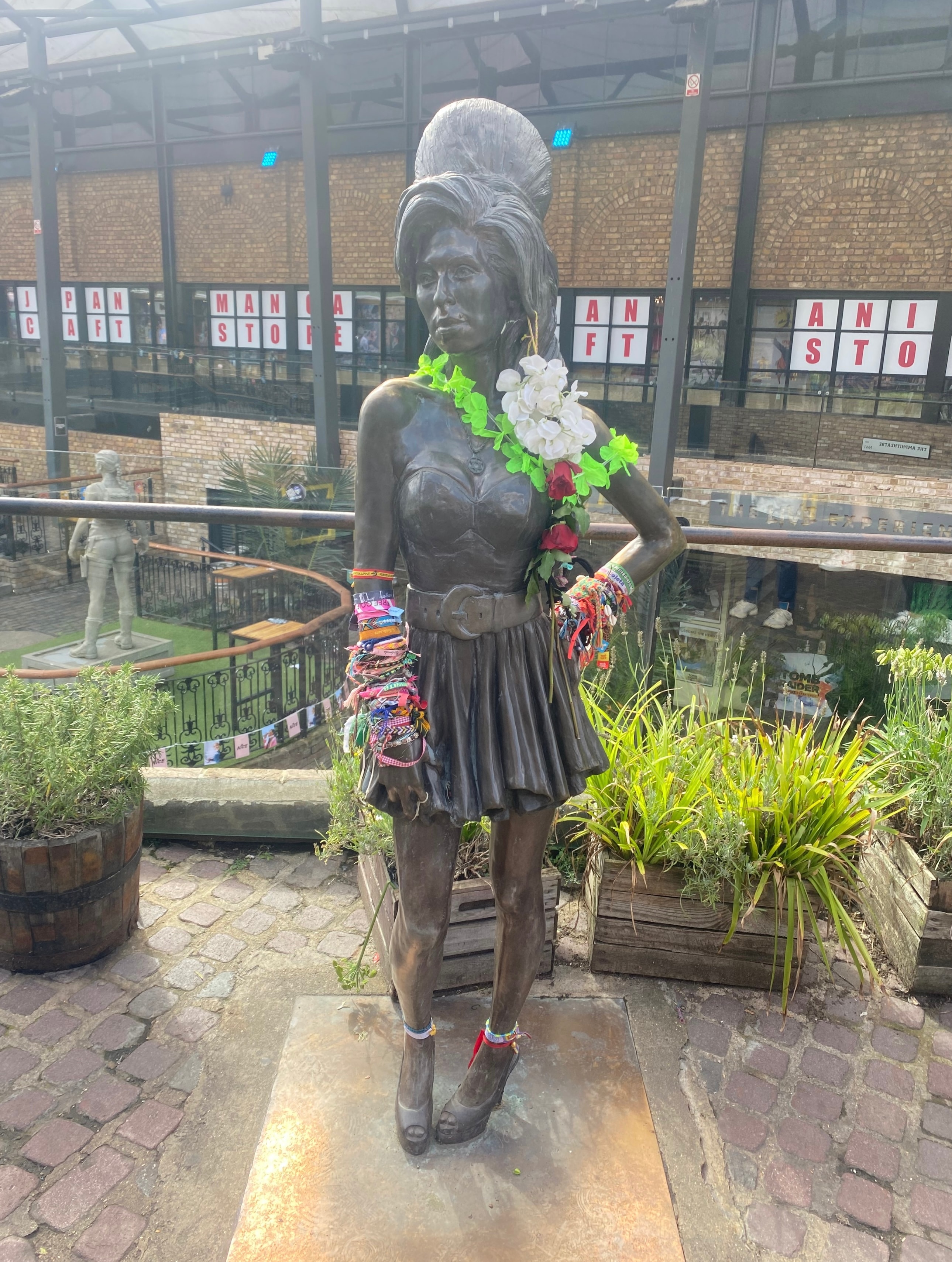
For Amy Winehouse fans, begin your walk at 30 Camden Square, where the singer lived and died in July 2011. A nearby tree has become an informal memorial where fans leave flowers and tributes. There is also a bronze statue of Amy Winehouse within Camden Market, unveiled in 2014.
Camden's Most Famous Resident
Amy Winehouse became closely associated with Camden during her career. She moved to Camden Square in 2005 and was a regular presence around the area's music scene, pubs and recording studios. She died at her home on 23 July 2011, aged 27. The bronze statue in Stables Market was unveiled in 2014 and was sculpted by Scott Eaton. Camden Square is a residential street — fans visit regularly but the neighbours are ordinary residents, so the informal memorial is best visited quietly and briefly.
Quick Cabbie Tips
- Camden Market gets extremely busy at weekends — go earlier in the morning for a quieter experience, or visit on a weekday.
- Keep an eye on your belongings around the Lock and Market when it's crowded — it's one of the busier tourist areas in London.
- Allow several hours if you want to visit London Zoo properly — it's a full half-day on its own. Book tickets in advance.
- Primrose Hill is a great place to finish the walk around sunset — the view across London in the evening light is excellent.
- The Amy Winehouse memorial at Camden Square is on a residential street — be respectful of local residents when visiting.
- You can walk the Regent's Canal towpath west from Camden Lock all the way to Little Venice in Paddington — a pleasant extension if you have the time.
Nine more routes
The Full London Collection
East London, Westminster, City of London, South Bank, Kensington, Notting Hill, Greenwich, Hampstead and more. One payment. All guides. More added over time.
Cabbie's London · Real recommendations from the driver's seat · Enjoy the walk